📏 Floor Leveling & Subfloor Preparation in Olathe, KS
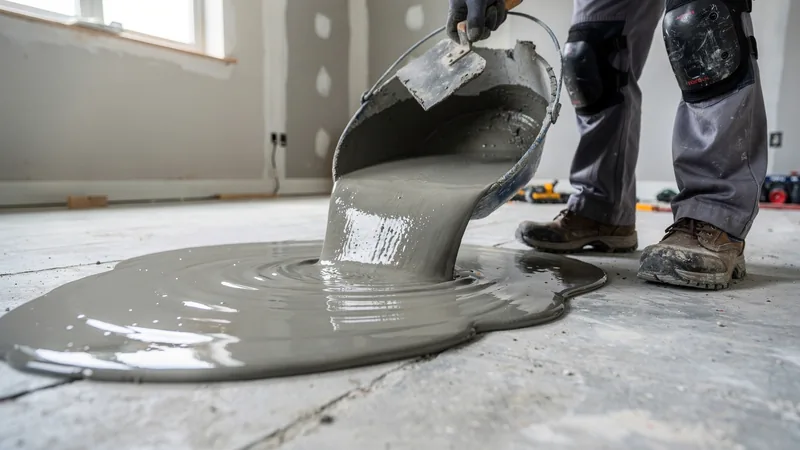
Olathe Wood Flooring provides floor leveling & subfloor preparation in Olathe, KS.
Free In-Home Estimates · Dust-Contained Refinishing · Solid & Engineered Hardwood
Self-leveling compound and subfloor correction before installation, not skipped to save a step.
Hardwood telegraphs whatever the subfloor underneath is doing, so a subfloor out of flat by more than about 3/16 inch over 10 feet gets corrected with a self-leveling compound before any new flooring goes down. Self-leveling work typically runs $2 to $8 per square foot depending on how much correction the subfloor needs, and it's a step we flag during the in-home estimate rather than as a surprise add-on once demolition has already started.
How We Check Flatness Before Quoting
We run a laser level across the room during the in-home estimate rather than eyeballing it, since a subfloor can look flat to the eye and still be out of tolerance enough to cause problems under a new floor, especially under an angled pattern installation. That reading tells us whether leveling is even needed before we quote the rest of the job.
What Happens If This Step Gets Skipped
Installing over an unlevel subfloor doesn't fail immediately — it shows up months later as squeaking, gapping, or a floor that feels slightly springy in one spot. We've been called in to fix installs where a previous contractor skipped leveling to save a day of labor, and the fix at that point means pulling up flooring that would otherwise still be good.
Frequently Asked Questions
How much does hardwood flooring installation cost in Olathe?
There is no official Olathe price list; published U.S. figures put professional refinishing at about $3 to $8 per square foot, engineered hardwood installed at about $4 to $9 and solid hardwood at about $5 to $10 per square foot. The provider gives a written price after seeing the floors.
What's the difference between solid and engineered hardwood, and which is better for Olathe homes?
Solid hardwood is one piece of wood top to bottom and needs 3 to 5 days to acclimate to your home's humidity before installation. Engineered hardwood has a plywood core under a real wood top layer, which resists the expansion and contraction that Johnson County's humidity swings can cause. We recommend engineered for basements and below-grade rooms, especially common in Olathe's newer south-side subdivisions, and solid for most main-level living areas.
How long does hardwood floor installation or refinishing take?
A typical single-room refinish takes 2 to 3 days including dry time. Whole-home installation usually runs 3 to 7 days depending on square footage and whether old flooring has to be removed first. We give you a specific timeline at the in-home estimate, not a generic range.
What areas do you serve around Olathe?
Olathe, Gardner, Spring Hill, De Soto, Edgerton, Mission Hills, Stilwell, Lake Quivira, and the rest of Johnson County, KS, plus Louisburg, Paola, and Osawatomie in Miami County and Ottawa in Franklin County.
Do I need a permit to install or refinish hardwood floors in Olathe?
Usually not for like-for-like flooring replacement. Subfloor repair or moisture-barrier work in a basement or other below-grade space can require one depending on scope. We check this during your in-home estimate so there are no surprises once work starts.
I'm buying an older home near downtown Olathe — how do I know if there's hardwood under the current flooring?
A quick inspection at a doorway threshold or closet corner, where flooring transitions are easiest to check, usually tells us within minutes. Homes built before Olathe's mid-20th-century growth boom very often have original oak underneath later carpet or vinyl, even when there's no visible sign from the surface.
Can engineered hardwood be refinished?
It depends on the wear layer, the real-wood top layer over the plywood core. Floors with a wear layer around 2 mm can usually take one light sanding; 3 to 4 mm or more can be sanded and refinished several times, close to solid hardwood. Very thin veneers and click-together floors with a 1 mm layer can't be sanded, but they can often get a screen-and-recoat, a light abrasion and fresh topcoat that renews the finish without touching the wood.
How long after refinishing can I walk on my floors?
With the water-based finishes most refinishers use today, you can usually walk on the floor in socks after about 24 hours, move furniture back after 2 to 4 days, and put rugs down after about two weeks, once the finish has fully cured. Oil-based polyurethane takes longer at every step. Humidity and cool temperatures slow drying, so a refinish in a humid Kansas July or a cold January can take a little longer.
How can I tell if my hardwood floors can be refinished?
Pull a floor register or look at the edge of the boards at a threshold: if there's a good amount of wood above the tongue, roughly 1/8 inch or more on solid boards, there's room to sand. Floors that have been sanded many times, show exposed nail heads or tongues, or are thin engineered veneer may only be candidates for a recoat. We measure before quoting a full sand-and-refinish.
Why is my hardwood floor cupping?
Cupping, boards with raised edges and a low center, means the bottom of the boards has more moisture than the top. In Johnson County it usually shows up in humid summers, over a damp crawlspace or basement, or after a leak from a dishwasher or refrigerator line. Find and fix the moisture source first and let the floor dry, often with a dehumidifier; many floors flatten back out. Sanding a cupped floor too soon leaves it crowned once it dries.
What's the best hardwood floor for dogs?
Harder species like hickory, white oak and maple resist dents better than softer woods, and a wire-brushed or hand-scraped texture with a matte finish hides scratches far better than a smooth glossy floor. A durable finish matters as much as the wood, and keeping nails trimmed, wiping up accidents quickly and putting runners in high-traffic paths does the rest. No real wood floor is scratch-proof.
Is hardwood a good choice for a kitchen?
Yes, with the right finish and habits. A well-sealed hardwood floor handles everyday kitchen spills fine as long as they're wiped up; the danger is slow leaks from a dishwasher, refrigerator line or sink that go unnoticed. Engineered hardwood is more stable than solid in a kitchen, and a mat at the sink catches most drips. Running the same floor from the kitchen into the living areas also makes the house feel larger.