Cupping, Crowning and Gaps: What Kansas Seasons Do to Hardwood Floors
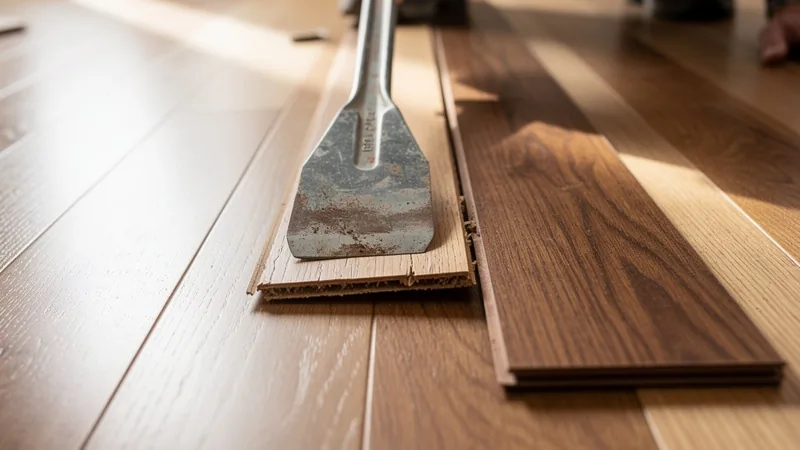
Hardwood is still wood, and in a place with humid summers and dry, heated winters like Olathe it gains and loses moisture all year. Some movement is normal; some is a warning sign. Winter gaps are the normal one: when the furnace dries the air, boards shrink and thin gaps open between them, then close again in spring. A whole-house humidifier that keeps indoor humidity in the 35 to 55 percent range reduces them. Cupping is the warning: the edges of the boards rise above the center because the underside is wetter than the top. The cause is usually below the floor, a damp crawlspace or basement, missing vapor retarder, or a slow leak, and it has to be found before anything else. Crowning is the opposite shape, a hump in the middle of each board, and it most often comes from a cupped floor that was sanded flat before it dried out; once the moisture leaves, the edges drop and the center stays high. Buckling, where boards lift off the subfloor entirely, means a lot of water, usually a flood or a long-running leak, and needs attention right away. Measuring moisture in the wood and the subfloor tells you which problem you have; it's the first step of our hardwood floor repair visits and of any moisture barrier work.
📞 Call (913) 361-6988